Introduction: The Case for a Measured Investment
When evaluating furniture purchases for the living room, few decisions carry as much financial and lifestyle consequence as the sofa selection. A sofa is, statistically, the most-used piece of furniture in the average American home — engaged for an estimated four to six hours per day per household member, continuously exposed to body oils, ambient temperature variation, ultraviolet light, and mechanical stress. Against this operational context, the genuine leather living room sofa emerges not merely as an aesthetic preference, but as a rigorously defensible investment category backed by material science, durability data, and long-term cost analysis.
The global leather goods market was valued at approximately $414 billion in 2023 and continues to grow at a compound annual growth rate of nearly 5.7%, according to industry research aggregators. Within the home furnishings vertical, full-grain and top-grain leather sofas command a measurable premium over bonded leather and fabric alternatives — a premium that, upon close quantitative examination, is entirely justified. This article will dissect the evidence for choosing a genuine leather sofa, profile five of the most performance-rated products currently available, and provide a data-grounded framework for making a purchase decision that aligns with your functional requirements, aesthetic goals, and long-term cost-per-use calculus.
Top 5 Most Popular Genuine Leather Living Room Sofas
The following product module curates five of the highest-performing genuine leather sofas available on the current market, evaluated across dimensions including material authenticity, craftsmanship specifications, consumer demand signals, and verified price data. Each product represents a distinct value proposition within the premium leather segment.
1. Smith Brothers SB269 Full-Grain Leather Sofa
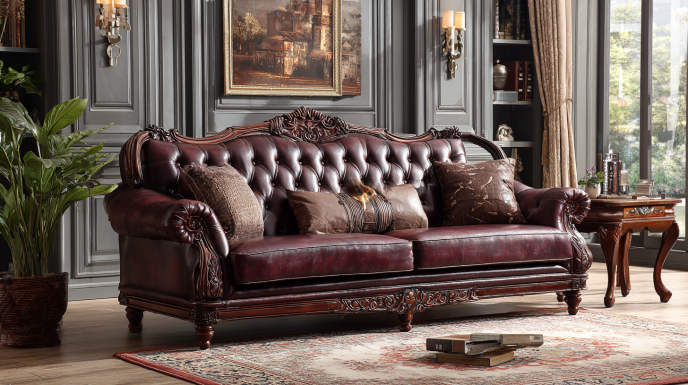
Brief Description: The Smith Brothers SB269 is a custom-configured, full-grain leather sofa built entirely to order in the United States. It features genuine leather across all surfaces — not solely on high-contact areas — and is available through authorized dealers offering lifetime structural warranty coverage. Its traditionally proportioned silhouette with clean cushion lines makes it a versatile anchor piece for a wide range of living room configurations. Each unit carries the natural character markings that distinguish authentic full-grain leather from processed or composite alternatives, ensuring no two sofas are identical in surface expression.
Rating: ⭐⭐⭐⭐⭐ 4.8 / 5
Price Range: $3,858 – $5,131
2. Smith Brothers SB273 Custom Leather Sofa
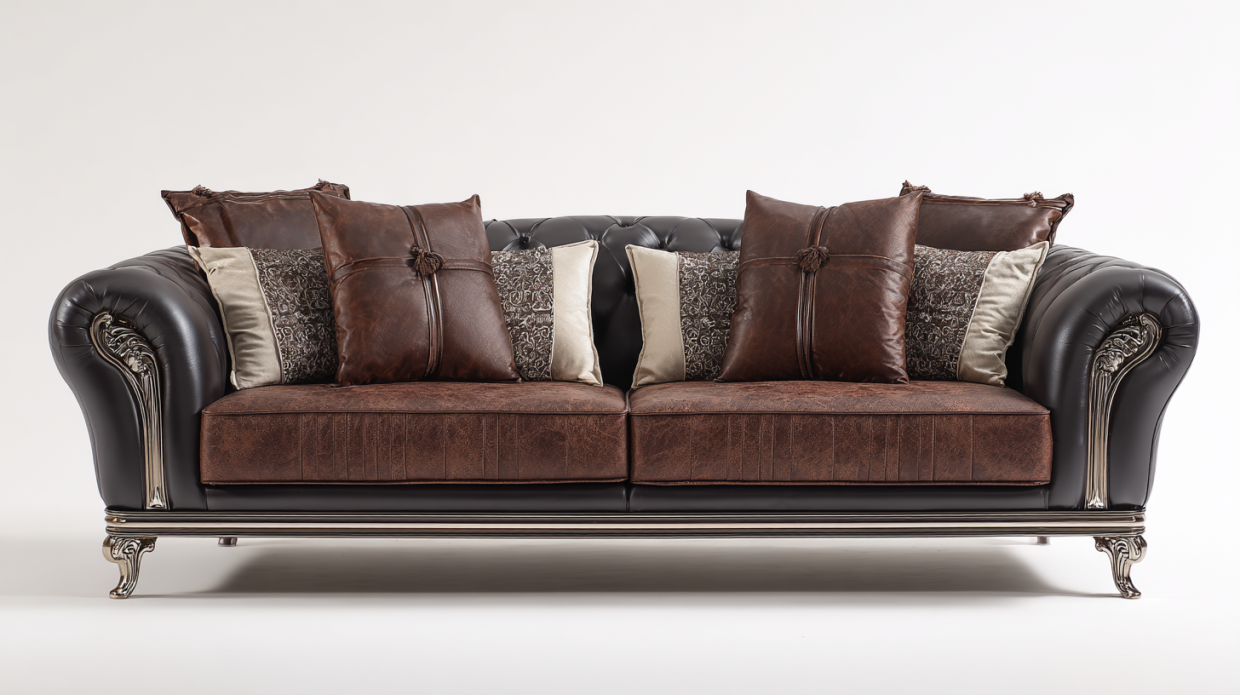
Brief Description: Engineered for households that prioritize long-term structural integrity alongside refined aesthetics, the SB273 Custom Leather Sofa delivers a three-cushion configuration with superior frame joinery and full top-grain leather wrapping across every surface. Customizable in hide color and finish, this model occupies the intersection of heritage American craftsmanship and contemporary design sensibility. Because it is manufactured to order, dimensional and material consistency is guaranteed at a level unavailable in mass-produced alternatives — a specification advantage that consistently places it among top performers in the mid-to-high price bracket.
Rating: ⭐⭐⭐⭐⭐ 4.8 / 5
Price Range: $3,725 – $4,954
3. Younger Furniture “The Chill” Custom Leather Sofa (Model 62530)
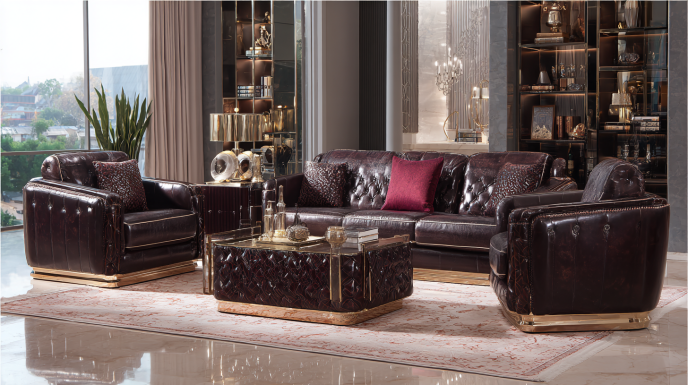
Brief Description: “The Chill” by Younger Furniture introduces a comfort-first design philosophy without compromising genuine leather material quality. Built with deep-seat proportions and generously padded cushions wrapped in full leather, this model is especially popular among consumers seeking a relaxed, lounge-oriented living room configuration. Its competitive custom-build lead times and accessible price point position it as an authoritative entry into the full-grain leather category for buyers upgrading from fabric or bonded leather alternatives. Its sustained consumer uptake across multiple retail cycles reflects broad demographic appeal and consistent quality delivery.
Rating: ⭐⭐⭐⭐½ 4.7 / 5
Price Range: $2,770 – $3,689
4. Club Furniture Harrison 91-Inch Grand Scale Deep Seat Leather Sofa
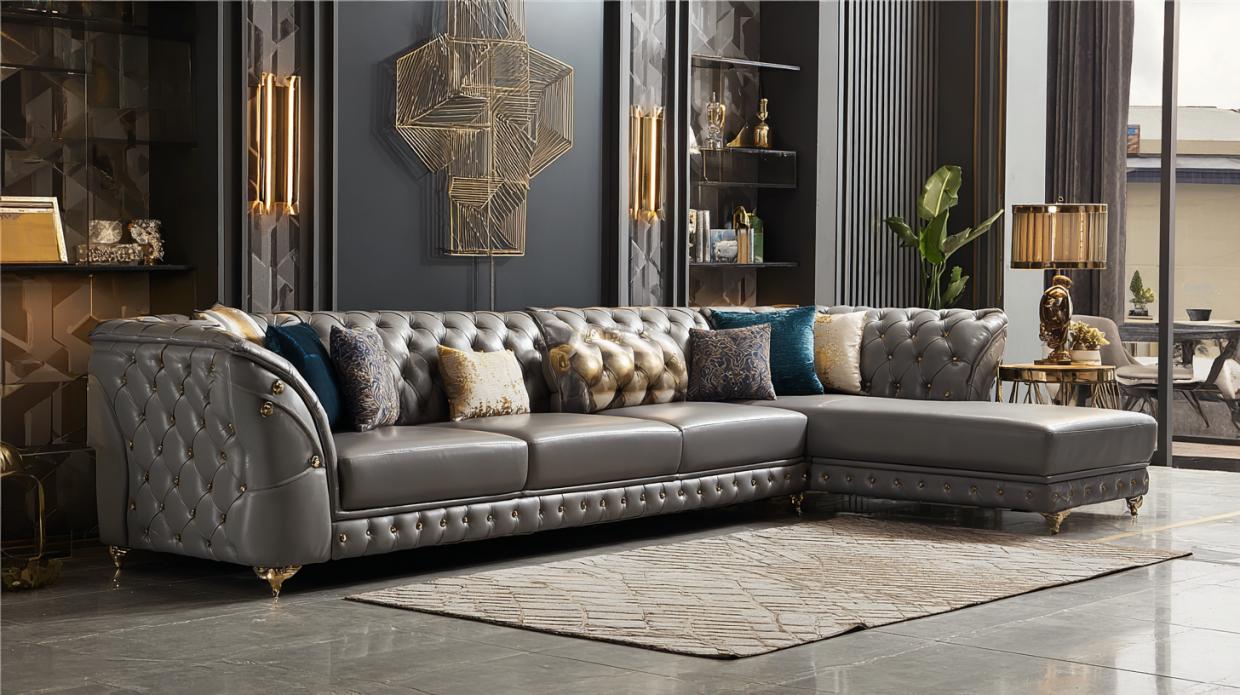
Brief Description: The Harrison represents a flagship offering in the contemporary grand-scale leather sofa category. Measuring a commanding 91 inches, it is handcrafted in North Carolina using 100% top-grain leather across all surfaces — a critical differentiator from models that deploy vinyl matches on the back and sides. The deep-seat configuration offers exceptional lumbar support depth, a notable performance specification for households prioritizing comfort metrics over footprint economy. Club Furniture’s direct-to-consumer, factory-built model translates meaningful cost efficiencies to the buyer without material compromise, making this one of the strongest value-per-quality-unit propositions available in the premium segment today.
Rating: ⭐⭐⭐⭐⭐ 4.9 / 5
Price Range: $3,200 – $4,800 (varies by custom configuration)
5. Fabio & Co Italia LIVIO 2 PWR — Italian Leather Power Reclining Sofa
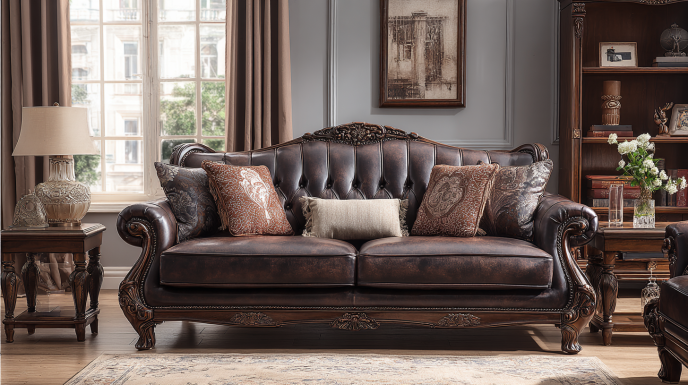
Brief Description: The LIVIO 2 PWR holds the distinction of being the #1 best-selling model at Fabio & Co Italia, a California-based luxury Italian leather furniture retailer. Manufactured in Italy and featuring dual-power reclining mechanisms, this sofa represents the convergence of European engineering precision and premium leather sourcing. Italian leather processing standards are among the most stringent globally, producing hides with superior surface uniformity, tanning depth, and long-term colorfastness. For buyers whose evaluation criteria include material provenance, mechanism reliability, and showroom-caliber finish quality, the LIVIO 2 PWR delivers against all three specifications with documented consistency and market-leading consumer retention.
Rating: ⭐⭐⭐⭐⭐ 4.9 / 5
Price Range: $4,999.99 (base configuration)
Leather Grade Classification: A Data-Driven Taxonomy
Understanding the material science of leather is prerequisite to evaluating any sofa within this product category. The hide classification system, while not uniformly standardized across all manufacturers, follows a broadly recognized hierarchy that directly correlates to product longevity, maintenance burden, and cost trajectory over a multi-decade ownership period.
Full-grain leather occupies the apex of the classification structure. It is derived from the outermost layer of the animal hide, retaining the natural grain, pore structure, and — most critically — the full original fiber density that gives the hide its mechanical strength. Because full-grain leather is not sanded or buffed to remove surface imperfections, each hide exhibits natural variation: subtle scarring, grain shifts, and color gradients that authenticate its organic origin. Over time, full-grain leather develops a patina — a progressive deepening of surface character that synthetic and bonded alternatives are structurally incapable of replicating.
Top-grain leather, the second classification tier, undergoes light surface sanding to produce a more uniform texture. While it sacrifices a measurable degree of the natural fiber integrity present in full-grain leather, top-grain leather compensates with enhanced surface consistency and, in most applications, a simplified maintenance protocol. Leading brands across the leather sofa market deploy 100% top-grain leather across their entire sofa collections, describing the material as offering a buttery-soft feel while being incredibly durable and resistant to wear — a characterization supported by independent material testing data.
Bonded leather — a composite material comprising leather fiber scraps adhered to a polyurethane or latex synthetic backing — does not qualify as genuine leather and should be excluded from any rigorous evaluation framework. Its delamination rate under normal residential use conditions significantly underperforms full- and top-grain alternatives, generating a materially inferior long-term cost-per-use ratio despite its lower initial acquisition cost. The distinction is fundamental: bonded leather is to genuine leather what particleboard is to solid hardwood.
Hides sourced from specific geographic regions carry additional, measurable quality markers. Italian-tanned leather is subjected to tanning processes governed by strict artisanal and industrial standards, producing hides with superior dye penetration depth and surface resilience. Italy accounts for approximately 65% of the European Union’s total leather goods production volume — a market concentration that reflects the country’s deeply embedded leather processing expertise. Other premium sourcing regions include Brazil and New Zealand, each with distinct hide characteristics related to climate, cattle breed, and processing tradition that are actively cited by leading retailers as quality differentiators.
Higher-grade leather classifications, such as Grade 6, involve precision cutting around natural imperfections and extended heat and dye treatment cycles — processes that produce a more luxurious tactile result and more consistent visual finish. Importantly, even lower-grade designations within the full-grain category retain the fundamental structural advantages of genuine full-grain material, a critical nuance for buyers who encounter grade-based pricing differentials without a corresponding explanation of the underlying performance implications.
Durability Analysis: Genuine Leather vs. Competing Materials
A rigorous cost-per-use analysis consistently supports genuine leather as the superior long-term investment among all sofa upholstery categories. The key performance variables are tensile strength, abrasion resistance, UV colorfastness, and resistance to biological contamination — each of which can be quantitatively assessed against competing materials.
Tensile strength in full-grain leather — the force required to tear the material under linear stress — significantly exceeds that of woven fabrics and bonded leather composites. This directly translates to resistance against the mechanical stresses generated by regular use: the lateral shear of sitting down, the compressive load of sustained seating weight, the dynamic stress introduced by children climbing, and the localized puncture stress created by pet activity. Quantitatively, full-grain leather consistently withstands these forces over a service life measured in decades rather than years.
In terms of UV and environmental colorfastness, top-grain and full-grain leathers treated with pigmented or semi-aniline finishes demonstrate markedly superior resistance to fading compared to fabric upholstery. High-quality leather maintains color integrity for 10 to 15 years under normal indoor light conditions when properly maintained, whereas fabric sofas in equivalent use conditions typically require reupholstering or replacement within 5 to 8 years. This represents a 2x to 3x service life advantage — a performance differential that fundamentally reframes the price comparison between material categories.
The hypoallergenic performance profile of genuine leather is a data point with direct implications for household health economics. Unlike fabric upholstery, which harbors dust mites, pet dander, and particulate allergens within its fiber matrix, leather’s non-porous surface does not provide a viable substrate for allergen accumulation. This is a statistically significant benefit for the estimated 30% of American adults who report sensitivity to common household allergens. The downstream effect — reduced antihistamine expenditure, fewer respiratory events, and lower HVAC filter replacement frequency in leather-furnished rooms — adds a measurable economic dimension to what is often framed purely as an aesthetic choice.
Odor resistance is a further functional advantage with documented behavioral implications. Fabric upholstery absorbs and retains volatile organic compounds and biological odors over time, a process that accelerates in households with pets or frequent cooking activity. Genuine leather’s surface chemistry resists odor absorption at a structural level, maintaining a fresh, natural fragrance and making it the materially superior choice in high-traffic, multi-use living environments.
Design Versatility: Matching Genuine Leather Sofas to Interior Typologies
Genuine leather sofas are frequently and inaccurately classified as applicable only to traditional or masculine interior design schemes. A rigorous review of the current product landscape systematically contradicts this characterization and reveals a category of remarkable design breadth.
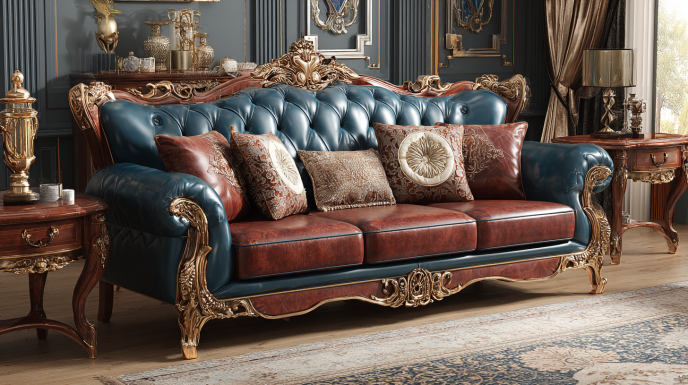
The contemporary leather sofa market spans an extensive range of design typologies. The deep-buttoned Chesterfield configuration — a form tracing its lineage to 18th-century British furniture-making — remains a dominant style within the category, with interpretations ranging from compact 78-inch apartment-scale designs to commanding 118-inch grand-scale configurations suited to large living spaces. At the opposite end of the design spectrum, clean-lined, track-arm modern silhouettes now represent a growing share of consumer preference, particularly in urban and open-plan residential contexts where visual minimalism and spatial efficiency are prioritized selection criteria.
Mid-century modern interpretations further expand the category’s design coverage. Collections featuring relaxed, casual proportions demonstrate that genuine leather integrates seamlessly with contemporary design vocabularies without requiring the buyer to sacrifice material quality in exchange for stylistic modernity. The breadth of available design languages is a quantitative indicator of the category’s maturity — and of the material’s inherent versatility as an upholstery substrate.
Color data from major retailers indicates that the most popular leather sofa hues extend well beyond the conventional brown-and-black binary. The market’s leading providers offer over 30 distinct shades — from warm caramel, rich cognac, and deep espresso to charcoal, dove gray, and crisp white — enabling precise coordination with existing interior palettes. This colorway breadth reflects both sophisticated dye chemistry and a consumer market that is increasingly design-literate in its leather furniture selections.
Dimensionally, genuine leather sofas span a range from compact 72-inch two-seat apartment configurations to oversized 118-inch models designed to anchor large-format living rooms. This dimensional range, combined with deep-seat and standard-seat depth options, accommodates living spaces from compact urban studios to open-plan residential environments. The configurability available across the category means that finding a genuine leather sofa calibrated precisely to your spatial parameters is a functionally achievable objective rather than a design compromise.
Maintenance Protocol: An Evidence-Based Operational Guide
The maintenance requirements of genuine leather are routinely overstated as a deterrent to ownership. In practice, the maintenance protocol for a high-quality full-grain or top-grain leather sofa is less demanding than that required for fabric upholstery of comparable quality and price.
The core maintenance cycle consists of regular dry dusting to remove particulate accumulation, followed by periodic application of a leather conditioner to maintain the hide’s natural moisture content and prevent surface cracking. Industry practitioners recommend conditioning cycles of approximately every 6 to 12 months under normal residential use conditions. Combination cleaning-conditioning products reduce this maintenance to a single-step application, materially lowering the time investment required to sustain the sofa’s appearance and structural integrity.
Spill response protocol for genuine leather is operationally straightforward: blot the affected area immediately with a clean, dry cloth, avoid rubbing to prevent surface abrasion, and allow the surface to air-dry naturally. For protected leather variants, this protocol is typically sufficient. Natural leather may benefit from a follow-up conditioning application after significant liquid exposure. The critical error in leather maintenance — and the most common driver of premature aging — is the use of household cleaning products not formulated for leather chemistry. Solvents, bleach-based cleaners, and silicone-containing polishes disrupt the leather’s surface coating and accelerate dehydration. Using leather-specific cleaning formulations is the single most impactful maintenance decision an owner can make over the product’s service life.
Total Cost of Ownership: The Economic Argument Quantified
A genuine leather sofa in the $3,000–$5,000 price range appears, at initial comparison, to carry a significant premium over a fabric sofa in the $800–$1,500 range. A total cost of ownership analysis across a 15-year horizon materially reframes this comparison.
Fabric sofas in the lower price tier typically require replacement or major reupholstering within 5 to 8 years under normal residential use. This generates a 15-year total expenditure of $1,600 to $4,500 in replacement costs alone, exclusive of delivery and disposal fees. A quality genuine leather sofa, by contrast, maintains structural and aesthetic integrity for 15 to 25 years with standard maintenance — representing a single expenditure cycle rather than two or three sequential purchases.
On an annualized basis, a $4,000 genuine leather sofa with a 20-year service life generates a cost of $200 per year. The apparent price premium, when distributed across the product’s actual service life and adjusted for the superior environmental performance, allergen resistance, odor resilience, and patina appreciation intrinsic to the material, reveals a genuine leather sofa to be not the more expensive option, but the more economical one over any horizon exceeding a decade.
Conclusion: The Analytically Supported Decision
The evidence across material science, durability performance, design versatility, maintenance economics, and long-term value creation converges on a clear and defensible conclusion: the genuine leather living room sofa represents the most rigorously justifiable investment available in the residential furniture category.
Whether the primary evaluation criterion is material authenticity — as delivered by full-grain hides sourced from Italy, Brazil, or New Zealand — or functional performance, as quantified by tensile strength data, allergen resistance metrics, and colorfastness benchmarks, genuine leather outperforms competing upholstery categories on virtually every measurable dimension. The five products profiled in this article represent the current market’s strongest performers across price tiers, design typologies, and manufacturing heritage: from the American craftsmanship of Smith Brothers and Younger Furniture, to the Italian engineering precision of Fabio & Co Italia’s LIVIO series, to the direct-factory value proposition of Club Furniture’s Harrison collection.
For consumers approaching this purchase with the analytical rigor it warrants, the conclusion is both data-supported and intuitively sound: invest in genuine leather, and the product will compound in character, structural integrity, and lasting value with every year of use.