The Case for Neutral Distressed Rugs: A Spec-First Introduction
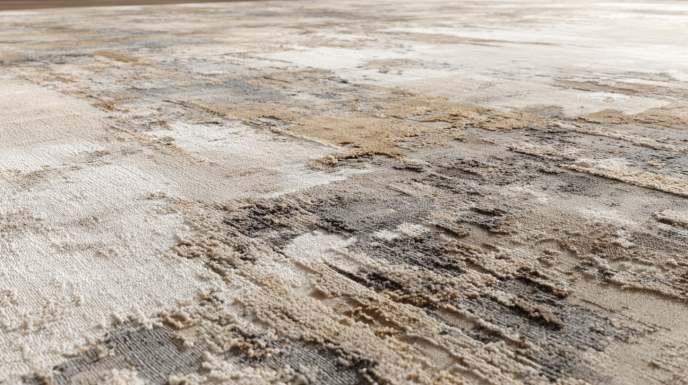
Neutral tone distressed rugs occupy a precise and well-defined niche in the floor covering category. They are not merely decorative objects — they are engineered textile systems that balance aesthetic fading effects with functional performance metrics including pile density, backing adhesion, fiber tensile strength, and wash-cycle durability. The “distressed” finish, which mimics the appearance of naturally aged or antique rugs, is achieved through either mechanical abrading, chemical wash treatments, or advanced digital printing techniques that layer worn-in visual effects onto low-pile constructions.
The neutral color palette — typically beige, taupe, cream, grey, and warm off-white — serves a dual engineering purpose. First, it reduces the visual dominance of the rug within a room, making it a universally compatible component across interior design systems ranging from Scandinavian minimalism to American farmhouse. Second, neutral tones better tolerate the visual noise introduced by the distressed printing process, creating coherent, sophisticated aesthetics without chromatic conflict. Unlike saturated colorways, neutral-toned distressed rugs do not compete visually with furniture upholstery, wall treatments, or architectural finishes — they function as compositional anchors that unify disparate design elements across a space.
In the current market, distressed area rugs account for a significant share of high-velocity floor covering sales. On Amazon alone, the “Distressed Area Rugs” search category returns over 4,000 results, with multiple individual SKUs reaching 1,000 to 2,000+ units sold per month. This volume signals not a passing trend, but a sustained consumer preference driven by measurable utility: these rugs are machine washable, low-pile by dominant construction type (which reduces trapping of allergens, dust, and debris), and visually forgiving — minor stains and wear patterns blend into the pre-aged aesthetic rather than registering as visible damage signatures.
The design range within this category spans from budget-accessible synthetic flat-weave prints to sustainably sourced, premium foliage-pattern constructions priced at over $1,000 for large-format configurations. Whether you are specifying for a high-traffic living room, a low-footfall home office, or a multi-use open-plan space, the data-driven analysis in this guide provides the granular specifications you need to make a well-informed purchase decision.
Top 5 Neutral Distressed Rugs: Ranked & Reviewed
The following five products represent the highest-performing options across popularity metrics, specification integrity, and value consistency in the neutral distressed rug category. Each entry is evaluated against a consistent framework: construction type, pile profile, size availability, sustainability certification, and price positioning.
1. Vintage Boho Medallion Washable Area Rug (Beige, 8×10 ft)
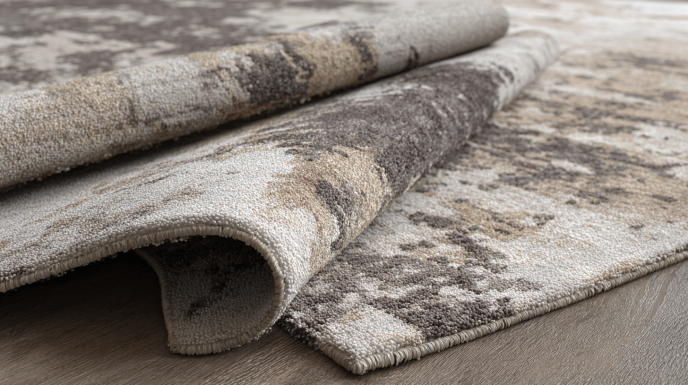
Brief Description: This rug holds the “Overall Pick” designation on Amazon — a classification awarded only to products that are rated 4+ stars, purchased frequently, and returned infrequently. The design centers on a vintage Boho medallion motif applied over a beige ground with a distressed wash overlay that creates tonal variation across the surface. Construction is non-slip, low-pile, and machine washable, making it suitable for living rooms, dining rooms, and home offices. The 8×10 ft size is the most purchased format in the distressed rug category and fits the standard American living room seating configuration. Certified under OEKO-TEX STANDARD 100 (Certification No. BJ028 202654), confirming full chemical safety compliance across every textile component.
Customer Rating: 4+ stars | Amazon’s Choice | 1,000+ units sold per month
Price Range: Mid-budget tier, with a 10% coupon discount available at purchase. Represents the strongest combination of specification depth, safety certification, and value at the 8×10 ft size point.
2. Loloi Layla Collection LAY-03 (Olive/Charcoal, 7’6″ × 9’6″)
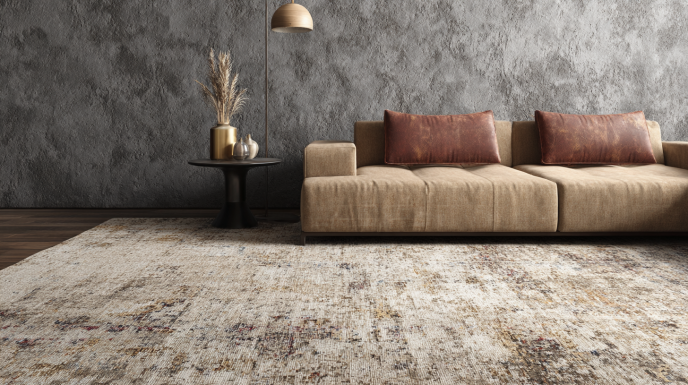
Brief Description: The Loloi Layla Collection is a designer-tier distressed rug that delivers a vintage-inspired aesthetic through a precision-printed, flat-woven construction. The olive and charcoal colorway sits firmly within the neutral-earth spectrum, and the distressed pattern overlay creates subtle visual depth that shifts appearance with changing ambient light. At an ultra-thin 0.13-inch pile height, it is classified as an ultra-low-profile product — optimal for placements under dining tables, beneath inward-swinging doors, or within layered rug styling configurations. Core differentiators include non-shedding certification, easy-clean surface treatment, and the brand’s established reputation for consistent colorway reproduction across its manufacturing run.
Customer Rating: Strong seller ranking | 400+ units sold per month
Price Range: Premium pricing tier commensurate with designer-label positioning. High and consistent sales velocity confirms a favorable price-to-perceived-value ratio.
3. Vintage Living Room Area Rug (Beige, 5×7 ft)
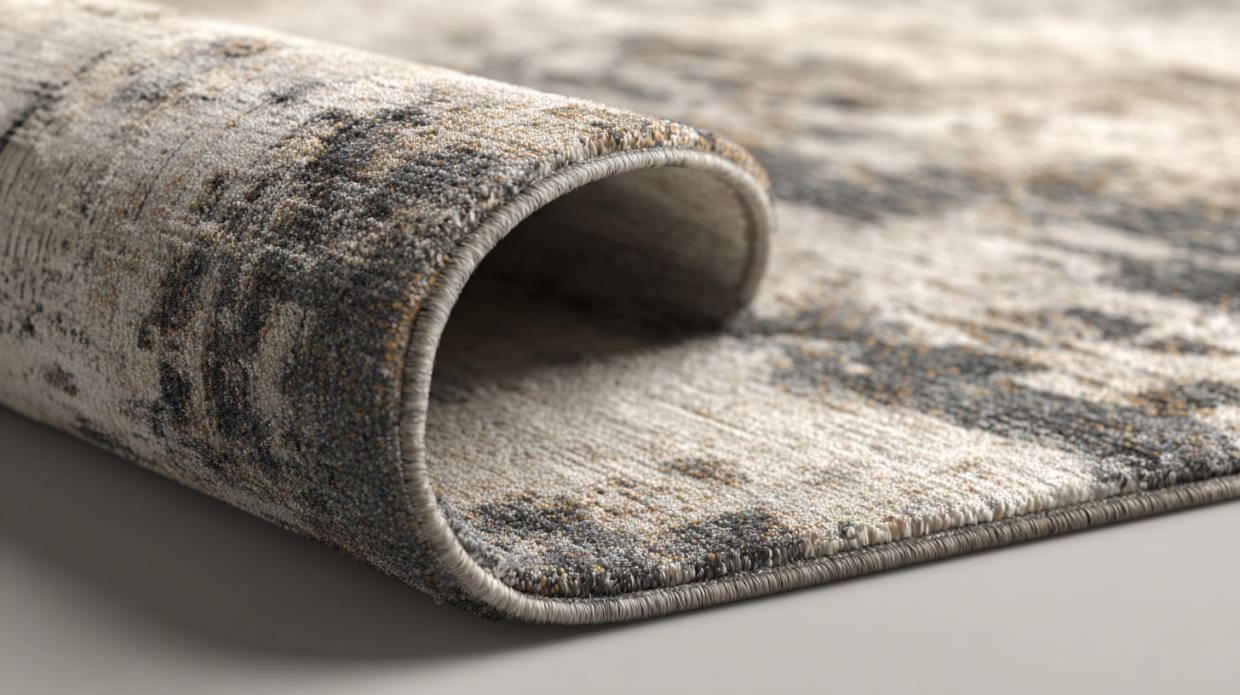
Brief Description: One of the highest-velocity sellers in the distressed rug mid-size segment, this 5×7 ft beige washable rug delivers a traditional oriental-distressed pattern featuring an aged medallion motif set against a neutral beige ground. The design integrates effectively into farmhouse, transitional, and contemporary room systems without imposing on the broader interior composition. It is non-slip backed, OEKO-TEX STANDARD 100 certified (Certification No. BJ028 202654), and rated for both bedroom and living room placement. The 5×7 ft format is the most economical entry point into the distressed rug category and provides sufficient surface area for the medallion composition to read as a complete design rather than a cropped fragment.
Customer Rating: 4+ stars | 600+ units sold per month
Price Range: Mid-range pricing with a 5% multi-item discount available. Strong purchase velocity indicates high satisfaction rates across diverse residential use cases.
4. Floral Vintage Distress Print Rug (Brick Red/Rust/Brown Neutral, 5×7 ft)
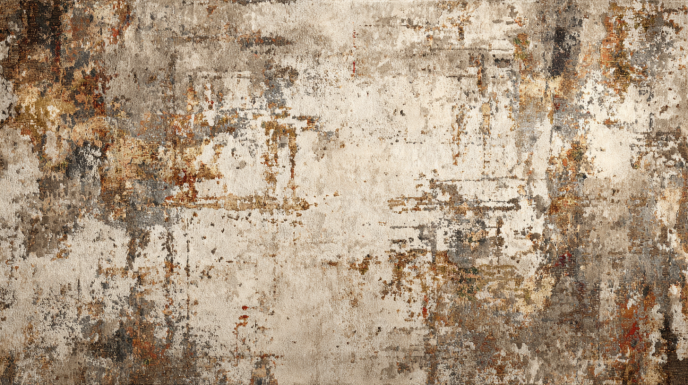
Brief Description: This is the single highest-selling distressed rug in the analyzed product dataset, driven by its unusually broad appeal across neutral-warm interior palettes. Although it features rust and brown accent tones, its neutral brown base qualifies it clearly within the neutral distressed category. The surface features a multi-layer floral medallion motif with a faded background wash, producing a visually rich but tonally restrained pattern. The warm brown-rust colorway performs particularly well in rooms with natural wood tones, exposed brick, or warm-metal hardware finishes. It is machine washable, non-slip, and carries OEKO-TEX STANDARD 100 certification (Certification No. 23.HCN.70711).
Customer Rating: 4+ stars | 2,000+ units sold per month — highest individual sales velocity in the analyzed product category
Price Range: Budget-to-mid-range tier. Widely recognized as one of the strongest value distressed rugs in the current Amazon marketplace.
5. West Elm Distressed Foliage Rug (Moonstone, Sustainably Sourced)
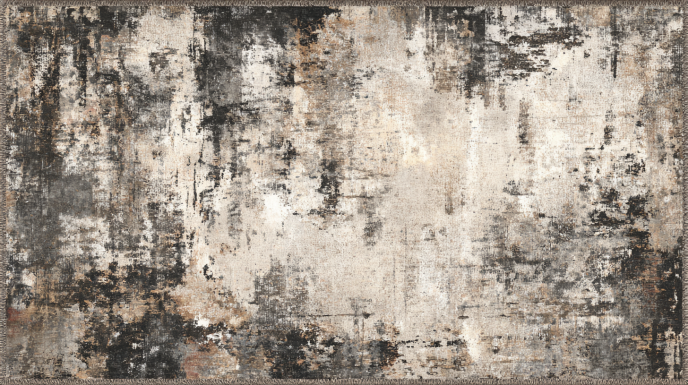
Brief Description: The West Elm Distressed Foliage Rug represents the premium benchmark in the neutral distressed rug segment. Shown in the Moonstone colorway — a cool, grey-toned neutral — the rug integrates an architecturally refined foliage-pattern distress design suitable for contemporary, coastal, and transitional interior specifications. The product is designated “Sustainably Sourced” under West Elm’s responsible retail standards, aligning with the company’s commitments to environmentally responsible material procurement and ethical manufacturing practices. Its broad price range reflects availability across multiple size configurations, from compact accent formats up to grand-scale room anchors. As a West Elm product, it carries implicit quality assurances around fiber sourcing consistency, colorway stability, and long-term pile integrity.
Customer Rating: Premium brand positioning | West Elm certified product
Price Range: $219 – $1,469, scaling with size. Ships in 1–4 weeks for in-stock configurations. Currently available as a Limited Time Offer.
Material Composition & Construction Analysis
Understanding the material architecture of a neutral distressed rug is foundational to predicting its performance across distinct use cases. The market currently presents three dominant material categories within this segment, each with measurable tradeoffs.
Polypropylene (Synthetic Flat-Woven): This is the most prevalent material in the high-volume distressed rug segment. Polypropylene delivers exceptional stain resistance, colorfastness, and wash-cycle durability. Because it does not absorb moisture, polypropylene-based rugs can withstand repeated machine washing without fiber degradation or dimensional distortion. The distressed print aesthetic on polypropylene is applied through high-resolution digital inkjet or rotary printing systems, which can reproduce precise tonal graduation and faded-edge effects that closely replicate the aesthetic of hand-knotted antique rugs at a fraction of the cost.
Chenille and Chenille-Print Blends: Several high-velocity products use a lightweight chenille print construction, which provides a marginally softer underfoot sensory experience than flat polypropylene while maintaining the low-pile profile necessary for easy maintenance. Chenille-distressed rugs are particularly well-suited to bedrooms and home offices where a measurable comfort differential from a hard floor surface is desirable without the maintenance overhead of a high-pile textile.
Faux Wool Synthetics: A growing niche within the category uses faux wool constructions — synthetic fibers engineered to replicate the visual and tactile properties of wool — while preserving the wash-cycle durability and allergen-resistance characteristics of fully synthetic fiber systems. These products offer a warmer, more textured surface appearance, and their distressed printing achieves a slightly more organic visual quality than standard polypropylene.
Natural Fibers (Jute and Sisal): For consumers who require a fully natural material specification, jute and sisal distressed rugs occupy a distinct sub-category. These rugs are typically not machine washable, carry a coarser pile texture, and are best suited to low-humidity, low-traffic decorative roles. Their distressed aesthetics are achieved through natural weave variation rather than a printed overlay, resulting in an organic, tonal surface character that differs fundamentally in production method and visual output from synthetic printed options.
Size Matrix: Matching Rug Dimensions to Room Specifications
The distressed rug category offers a comprehensive size matrix that maps directly to standard residential room configurations:
2×3 ft to 3×5 ft: Entry-level accent format. Used in entryways, kitchen accent zones, and bedside placements. At this scale, the distressed pattern emphasizes a central medallion or border motif.
5×7 ft to 5×8 ft: The standard mid-size format for bedrooms, small living rooms, and secondary seating areas. At this scale, the distressed pattern has sufficient surface area to read as a complete design composition rather than a cropped fragment. This is also the most economically accessible size tier.
6×9 ft: An intermediate format suited to medium-sized living rooms and open dining areas. Multiple products in the analyzed dataset achieve 200+ monthly sales at the 6×9 configuration, confirming strong and consistent consumer demand.
8×10 ft: The dominant size category for distressed area rugs, accounting for the highest sales volumes across the dataset. This format fits the standard American living room seating configuration — sofa and two accent chairs with front legs on the rug — while maintaining 12–18 inches of clearance on each lateral edge.
9×12 ft: The large-scale specification for grand living rooms, open-plan areas, and formal dining rooms. At this size, the distressed pattern can be experienced in its full compositional context, including the interplay between the central medallion, field pattern, and border treatment.
10×14 ft and above: Available in select premium product lines. Best suited to oversized rooms, loft environments, or commercial-scale residential spaces where the 9×12 ft format provides insufficient coverage.
Pile Height Classification
Pile height is one of the most critical functional specifications in the distressed rug category, directly affecting vacuuming protocol, wash-cycle suitability, and underfoot sensory performance.
Ultra-Low Pile (0.10–0.20 inches / 2.5–5mm): Represented by the Loloi Layla LAY-03 at 0.13 inches. Optimal for under-dining-table placements, high-clearance door thresholds, and layered styling configurations. Easiest to vacuum with standard suction-only units, and most resistant to compaction in high-traffic zones.
Low Pile (0.20–0.40 inches / 5–10mm): The most common pile height classification across the distressed rug category. Provides measurable underfoot cushioning while maintaining the flat-printed surface aesthetic required for high-resolution distress pattern fidelity. Machine washability is most reliable and consistent in this pile range.
Medium Pile (0.40–0.75 inches / 10–19mm): Less common in the distressed print segment. More typical of faux wool and chenille constructions. Delivers a warmer sensory experience but requires more aggressive vacuuming protocols to prevent debris compaction and fiber matting in high-traffic zones.
Sustainability Certifications: A Technical Glossary
Multiple products in the analyzed dataset carry third-party sustainability certifications. Understanding these certifications is essential for consumers specifying rugs based on health-safety or environmental compliance criteria.
OEKO-TEX STANDARD 100: The most frequently appearing certification across the analyzed product listings. It mandates that every component of a textile product — including all thread, trims, dyes, and backing materials — be tested against a list of more than 1,000 regulated and unregulated chemicals that may be harmful to human health. The assessment process is globally standardized, independently conducted, and updated at minimum once per year based on evolving scientific data or regulatory changes. Certification numbers from the analyzed dataset include BJ028 202654, 24.HCN.12289, and 23.HCN.70711.
Global Recycled Standard (GRS): Carried by select products in the dataset. GRS certification confirms that a product contains at least 50% verified recycled content, independently validated at each stage of the supply chain. This certification also encompasses social, environmental, and chemical compliance standards. For GRS-certified rugs in the analyzed dataset, certifying bodies include SGS and Intertek.
West Elm Sustainably Sourced Designation: The West Elm Distressed Foliage Rug carries this designation under the brand’s responsible retail standards, which encompass responsible fiber sourcing, environmental management in manufacturing, and alignment with fair trade certification frameworks.
Care & Maintenance Protocol by Construction Type
Machine Washable Synthetic Low-Pile: The majority of products in the analyzed dataset are machine washable. Standard protocol: gentle cycle in cold water with mild detergent, tumble dry on low heat or air flat. For 8×10 and larger formats, a commercial-capacity washer of 4.5 cubic feet or greater is recommended to prevent agitation stress on the rug backing compound.
Spot Clean Only (Natural Fiber and High-Pile): Jute, sisal, and high-pile constructions are not suitable for machine washing. Spot cleaning with a diluted mild detergent solution and a clean cloth is the standard protocol. Avoid saturation. Dry flat with full air ventilation to prevent mildew formation in the natural fiber matrix.
Vacuuming Protocol: For all pile types, regular vacuuming — minimum twice weekly in high-traffic zones — prevents debris compaction and extends pile integrity over the product lifecycle. For low and ultra-low pile rugs, a suction-only vacuum without a rotating brush bar is recommended to avoid surface abrasion that could degrade the precision of the printed distress effect.
Anti-Slip Backing Maintenance: Thermoplastic rubber (TPR) and rubber anti-slip backings are the most common in this product category. These should not be exposed to high heat in a dryer, as thermal degradation of the backing compound measurably reduces slip-resistance performance over repeated wash cycles. Air drying remains the preferred protocol for maintaining long-term backing integrity.
Room-by-Room Application Guide
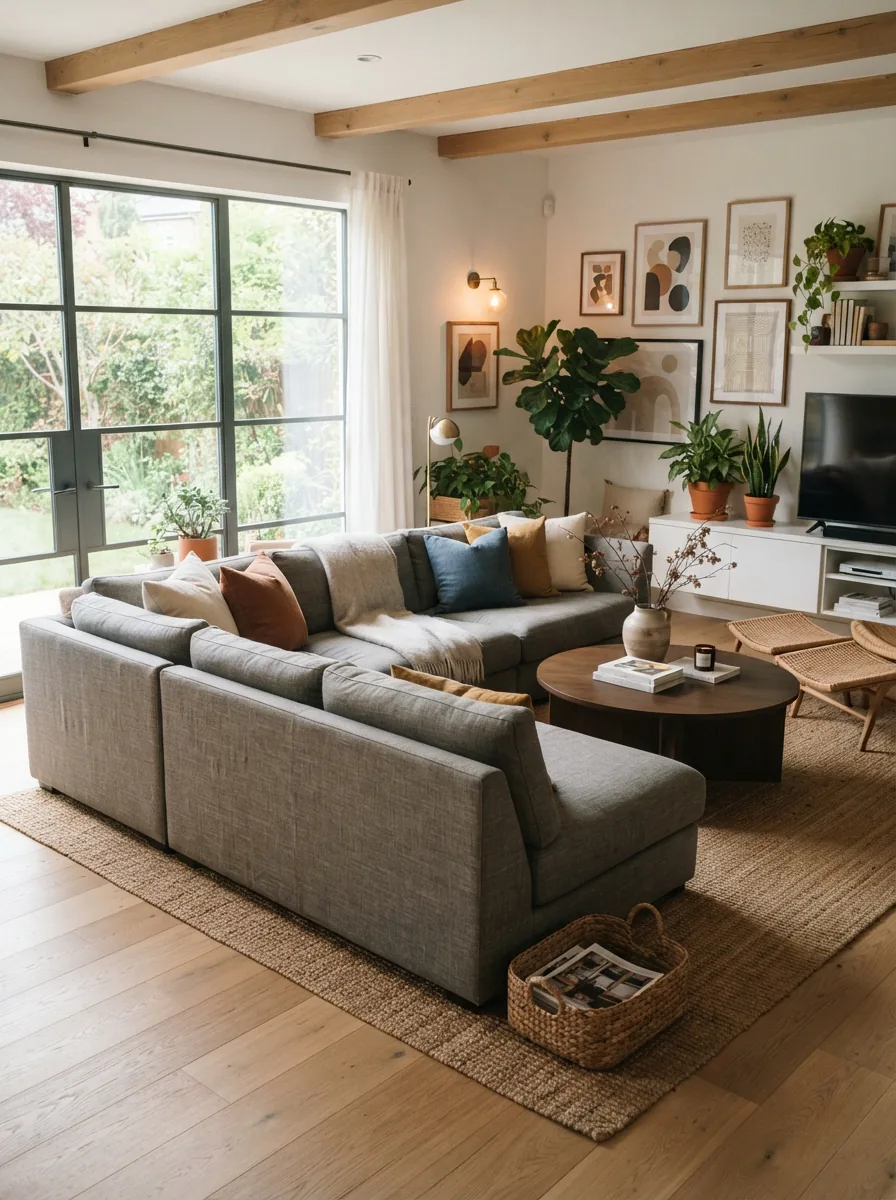
Living Room: The 8×10 ft format is the primary specification for living room placement. In a neutral distressed rug, the worn-in aesthetic reduces the visual weight of the floor covering, allowing furniture pieces and architectural features to maintain compositional dominance. Beige, taupe, and warm grey colorways perform best under natural light exposure, as they diffuse ambient light without creating harsh reflective spots.
Bedroom: The 5×7 ft format, positioned at the foot of the bed with 12–18 inches extending on each side, is the standard bedroom configuration for distressed rugs. Low-pile constructions offer a soft landing surface upon waking without the fiber depth that accumulates allergens. Washability is a primary functional requirement in bedroom placements due to elevated humidity exposure.
Dining Room: The 9×12 ft format is the recommended specification for dining room placements, providing sufficient area to accommodate all chair legs both in the seated and pulled-out positions. The distressed pattern is functionally advantageous in this application because surface marks from chair movement blend into the pre-aged visual texture rather than registering as isolated damage events.
Home Office: The 6×9 ft and 5×7 ft formats serve home office specifications well, providing zone definition and acoustic absorption in open-plan environments. Neutral grey, olive, and taupe distressed rugs are particularly effective in office contexts, as they avoid chromatic distraction while contributing necessary visual warmth to an otherwise utilitarian space.
Entryway and High-Traffic Corridors: Smaller format rugs with washable construction and anti-slip backing are the correct specification for entryway use. The distressed aesthetic is functionally ideal in entryway applications because it conceals the traffic lane patterns that would be clearly visible on a uniform-tone solid rug.
Price-to-Performance Breakdown
The neutral distressed rug market spans a wide price range. Based on the analyzed product dataset, the following tier structure applies:
Budget Tier (Under $70): 5×7 ft and 6×9 ft synthetic printed rugs with OEKO-TEX certification. Reliable washability and anti-slip backing specs. Best suited for low-to-medium traffic applications or consumers with adaptive aesthetic requirements.
Mid-Range Tier ($70–$150): 8×10 ft and 9×12 ft rugs with higher surface print resolution, stronger brand presence, and multi-certification sustainability profiles. This is the highest-volume price tier in the distressed rug category, accounting for the majority of 1,000+ monthly purchase SKUs in the Amazon dataset.
Premium Tier ($150–$500): Designer-label products including the Loloi Layla Collection and the entry-to-mid sizes of the West Elm Distressed Foliage Rug. Superior colorway consistency, more architecturally complex distress pattern constructions, and stronger brand-level quality assurances justify the premium differential.
Luxury Tier ($500–$1,469): Represented at its upper bound by the West Elm Distressed Foliage Rug in large-format configurations. These products are specified as long-term investments for high-visibility rooms where material sourcing, sustainability credentials, and visual scale converge into a single premium purchase decision.
Final Verdict: Matching Specification to Use Case
The neutral distressed rug category is among the most rigorously engineered and specification-rich segments in the residential floor covering market. Advances in digital textile printing, widespread adoption of OEKO-TEX and GRS certification, machine-washable construction engineering, and a comprehensive multi-format size matrix have collectively produced a product category that performs consistently and predictably across a wide range of room types, traffic intensities, and interior design systems.
For the highest-value mid-range specification, the 8×10 ft beige medallion washable rug — Amazon’s Choice, OEKO-TEX certified, and regularly purchased by over 1,000 consumers per month — delivers the best documented balance of functional performance and visual versatility. For consumers prioritizing design distinction and sustainability credentials, the West Elm Distressed Foliage Rug in Moonstone establishes the premium benchmark in neutral distressed rug design, with a $219–$1,469 price range that scales proportionally with room size requirements.
In every configuration — from the compact 5×7 ft bedroom accent to the room-defining 9×12 ft open-plan anchor — neutral distressed rugs deliver a measurable functional and aesthetic return that explains their sustained and growing dominance across the residential textile market. The data consistently confirms that this is not a decorative category driven by momentary trend cycles, but a specification-validated product class built on durable utility, material safety, and time-tested visual appeal.