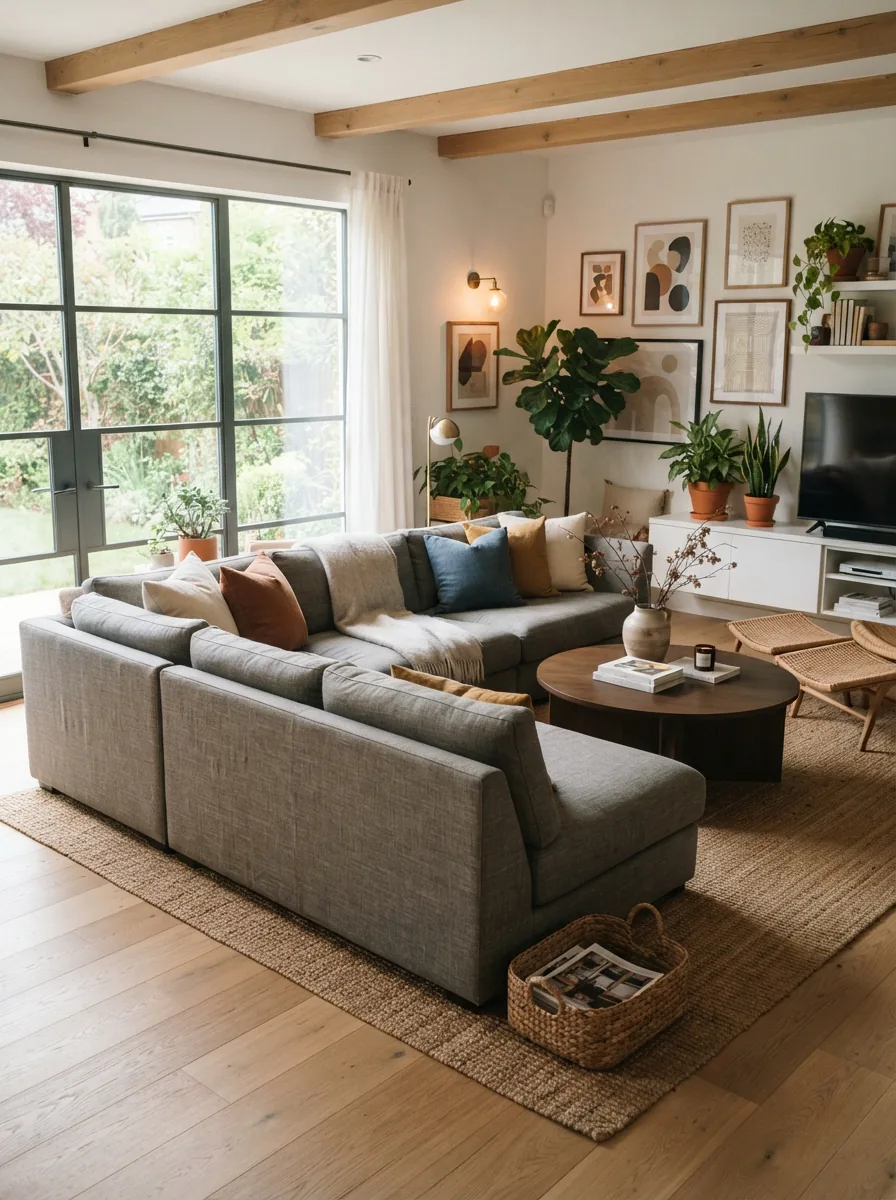
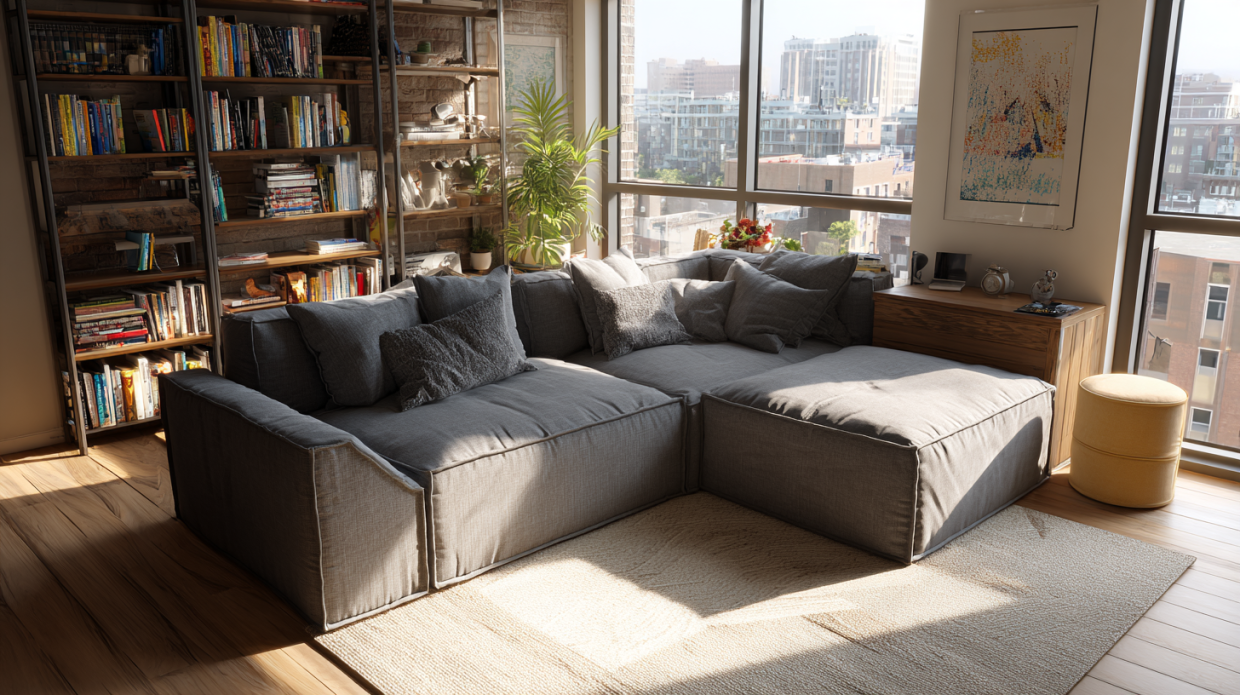
Finding a sectional that genuinely fits a small apartment without overwhelming it is harder than it looks. Most sectionals on the market are designed with generous square footage in mind — wide, deep, sprawling configurations that perform well in a showroom but become a wall-to-wall obstacle the moment they arrive in a 600-square-foot unit. Space-saving apartment sectionals exist to solve exactly that problem: they deliver the seating capacity and comfort of a full sectional while maintaining a footprint compact enough to leave room for actual living. Unlike standard sectionals that simply get scaled down in photos, the best apartment-sized models are engineered differently from the start — with thinner arm profiles, lower seat backs, reversible configurations, and modular construction that adapts to real-world room constraints. This guide covers everything you need to know before making a purchase: from the top-performing products in this category, to how to measure your space, select the right material, and care for the piece over time.
5 Top-Rated Space-Saving Apartment Sectionals
The following five products represent the most consistently purchased and highly reviewed options in the compact sectional category, selected on the basis of verified customer ratings, dimensional efficiency, and functional value.
1. Stark Reversible Chaise Sectional
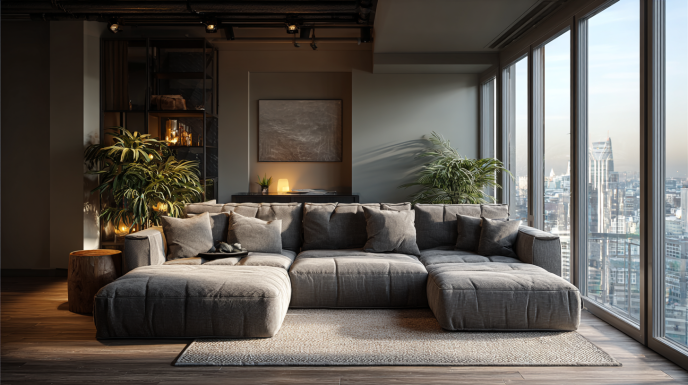
One of the most compact full-function sectionals available. The Stark features a streamlined track arm design and a fully reversible chaise that adapts to left- or right-facing configurations without requiring a separate purchase. At just 80 inches wide and 62 inches deep, it fits in rooms where most sectionals simply will not. The slim profile does not sacrifice support — the cushioned seat delivers firm, reliable comfort for daily use, and the track arms keep the overall footprint visually and physically light. Available in multiple fabric colorways including dark grey and light grey.
- Ratings: ★★★★☆ (1,489 verified reviews)
- Price Range: Starting at $395
2. Zone Modular L-Shaped Sectional
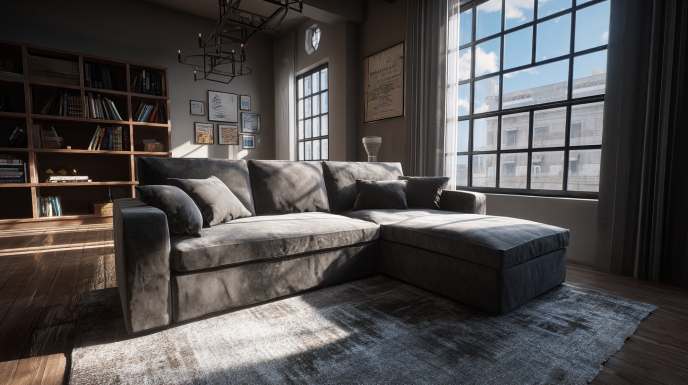
A fully modular 4-piece L-shaped sectional that includes two corner pieces, one armless chair, and a 43-inch oversized square ottoman — all in a reversible configuration. At 124 inches wide, it remains compact relative to its seating capacity, making it a strong choice for open-plan apartments where one piece needs to do the work of multiple. The clean-line design and neutral colorways — Cream White and Green are the most popular — integrate easily with contemporary and transitional interiors. The modular structure allows individual pieces to be repositioned or stored separately as spatial needs change, which gives this product a long-term adaptability that fixed sectionals cannot match.
- Ratings: ★★★★★ (6,372 verified reviews)
- Price Range: Starting at $1,495
3. Bonaterra Sofa with Reversible Chaise

At 97 inches wide, the Bonaterra hits the sweet spot between compact footprint and genuine seating capacity. It features track arms, a loose reversible back cushion, and configurable modular build options — making it one of the most customizable entries in this size category. Plush back cushions give it a high-quality aesthetic that reads above its price point, and the reversible chaise means the same configuration adapts to different room layouts. Available in Sand Beige and additional colorways, with the option to expand into a larger configuration over time. Consistently praised in customer feedback for durability, fabric quality, and ease of arrangement.
- Ratings: ★★★★☆ (2,445 verified reviews)
- Price Range: Starting at $850 (regularly $920)
4. Sebastian Storage Sectional
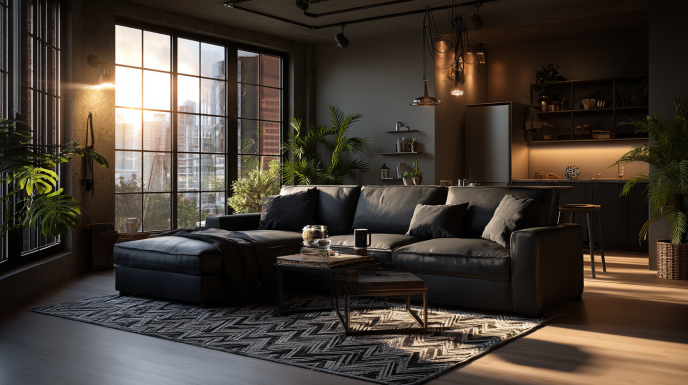
The Sebastian is purpose-built for apartments where every square inch of storage matters. A loveseat-inspired silhouette keeps the visual presence low and unobtrusive, while a hidden storage chaise underneath the seating surface provides functional interior space for blankets, pillows, and everyday items. At 111 inches wide and 64 inches deep, it positions efficiently along a single wall with clearance to spare. The cream colorway is well-suited to minimalist and cozy-modern interiors. Customer reviews consistently highlight three qualities above all others: the quality of the cushion comfort, the build integrity, and the practical daily advantage delivered by the built-in storage.
- Ratings: ★★★★☆ (644 verified reviews)
- Price Range: Starting at $1,550
5. Korver Apartment Sectional

The Korver is designed from the ground up as an apartment-scale sectional — proportioned specifically for compact living without compromising structural quality or seating depth. Its clean silhouette and a fabric selection spanning over 80 options make it one of the most versatile entries in this category for buyers who prioritize design flexibility. Currently trending among urban apartment dwellers, it is particularly popular with renters who plan to move and need a piece that can adapt to new floor plans. Custom upholstery options are available to match a broad range of interior palettes.
- Ratings: Trending (top category performer)
- Price Range: Starting at $2,456 (regularly $3,275)
What Actually Makes a Sectional “Apartment-Size”
The term “apartment sectional” is widely used but inconsistently applied. In practice, a true apartment-size sectional falls within specific dimensional parameters: typically under 110 inches wide on the longer arm, and under 80 inches on the shorter arm. Depth measurements matter as much as width. A sectional measuring 90 inches wide but 100 inches deep still dominates a small room in ways its width measurement does not reveal.
The most functional compact sectionals share a set of structural characteristics. They use thinner, lower-profile arms — track arms in particular — which reduce the external footprint without reducing usable seat width. A standard rolled arm adds 8 to 12 inches to the overall width of a sectional on each side; a track arm adds virtually none. Compact sectionals also favor lower seat backs, which prevent the piece from blocking sightlines and natural light across a room, keeping the space feeling open even when the sectional is large relative to the room. And the best options in this category are offered in reversible or modular configurations, allowing the same unit to fit multiple possible room arrangements without requiring a separate purchase.
Understanding these structural characteristics helps shoppers avoid the most common mistake in this category: purchasing a sectional labeled “small” or “apartment-sized” that still behaves like a large one once it is inside the room.
Key Features That Deliver the Highest Value
Reversible chaise configuration is one of the most valuable features available in this category. A sectional with a reversible chaise can be configured with the chaise on the left or the right, meaning the same unit adapts to different room layouts — including rooms where the placement of a door, window, or hallway determines which direction the chaise must face. This single feature eliminates the most frequent and costly purchasing mistake: buying a fixed-orientation sectional that faces the wrong direction for the room it arrives in.
Built-in storage adds immediate functional value in apartments where closet and cabinet space is limited. Storage sectionals — particularly those with a chaise that lifts to reveal interior space — allow everyday items to be stored inside the furniture itself, which is a direct square-footage multiplier. In practice, a storage sectional often eliminates the need for a storage ottoman, an additional chest, or a hall closet overflow solution.
Modular construction delivers the highest level of long-term flexibility. A fully modular sectional allows individual sections to be separated, repositioned, and recombined as spatial needs shift. For renters who move frequently, this is a structural advantage that extends beyond comfort: modular sectionals move through doorways and stairwells in sections rather than as a single oversized unit, which reduces damage risk during moves and removes the logistical dependency on professional moving services in many cases. Modular designs also support incremental purchasing — buyers can start with a two- or three-piece configuration and add sections later as budget or space allows.
Track arms are worth seeking out deliberately. Unlike rolled or pillow-top arms, which add 6 to 12 inches per side to the total width, track arms maintain a clean flush profile at the edge of the seat. This makes the sectional narrower in actual footprint, easier to position against walls, and visually lighter in a compact room. Almost every top-performing compact sectional in the current market uses track arms for this reason.
Integrated USB ports and charging — available on select models — add practical daily utility without requiring additional furniture. In apartments with limited outlet access, a sectional with integrated USB-A and USB-C ports adds a functional charging station directly to the seating area at no additional floor space cost.
Materials and Upholstery: Making the Right Decision for Your Situation
The upholstery material of an apartment sectional determines long-term usability, maintenance requirements, and how well the piece ages in a compact, high-use environment. Choosing the wrong material for your lifestyle costs more in maintenance and replacement over time than the initial price difference between material tiers.
Performance fabric — including treated polyester blends, performance velvet, and tightly woven microfiber — is the most practical category for households with pets, children, or both. These materials are engineered to resist staining, repel moisture, and withstand repeated cleaning without degrading. Many performance fabrics are treated at the fiber level, meaning spills bead on the surface and can be blotted away rather than absorbed. For households where the sectional serves as the primary seating surface for work, entertainment, and rest, performance fabric is the most durable long-term material investment available.
Chenille offers a softer, warmer aesthetic and holds its appearance well under regular use. It provides tactile warmth that flat-weave performance fabrics do not replicate, and it is available across several of the top compact sectional models including the Bonaterra and the Stark. Stain resistance varies by weave density — tighter-woven chenille performs significantly better than open or loose weave options.
Linen and linen-blend fabrics provide a lighter, breathable feel suited to warmer climates or rooms with high natural light. They tend to show surface wear faster than performance options and are more susceptible to permanent staining, but they deliver an organic, natural-fiber aesthetic that suits minimalist and bohemian design palettes.
Faux leather is worth evaluating specifically for cleaning ease — surface wiping handles most spills without fabric care protocols. However, long-term durability varies significantly by product quality. High-quality faux leather maintains its appearance for years; lower-quality bonded leather constructions can begin to crack or peel within two to three years of daily use. Always review the full material composition in the product specifications before selecting a faux leather option.
For households with pets, the highest-performing upholstery choices are stain-resistant fabrics with tight, smooth surface weaves. Loosely woven or textured fabrics trap pet hair in their fibers and are difficult to clean thoroughly with standard tools. Smooth, tightly woven performance fabrics allow pet hair to be vacuumed or brushed off the surface efficiently. Removable, machine-washable cushion covers are a significant practical advantage in this context and should be a priority feature for pet-owning buyers.
How to Measure Your Space Before Purchasing
Buying a sectional without first measuring the room — and the access routes into it — is the most common and most expensive purchasing mistake in this category. The following process eliminates that risk completely.
Measure the room in full. Record the total length and width in inches. Note the placement of all doors, windows, radiators, air vents, and electrical outlets, as each of these constrains where the sectional can be positioned.
Identify the sectional zone. Decide whether the sectional will sit against a wall, anchor a corner, or float in the center of the room. A corner placement is the most space-efficient configuration for L-shaped sectionals, using wall space that would otherwise be unused and leaving the center of the room open for traffic flow. A floating configuration works better in larger rooms where the sectional is intended to define a seating zone.
Calculate clearance. Leave a minimum of 18 inches between the sectional and adjacent furniture or walls for comfortable movement. In primary traffic paths — between the sectional and the television, between the seating area and the kitchen, and along routes to doorways — 36 inches of clearance is the functional minimum for comfortable daily circulation.
Measure every delivery access point. Record the width of every doorway, hallway, staircase turn, and elevator the sectional must pass through during delivery. Standard interior doorways in apartment buildings measure 32 to 36 inches; the sectional’s depth measurement must be narrower than the tightest access point it needs to pass through, unless it ships in modular pieces that are assembled on-site. This is the step most buyers skip and most regret.
Use tape on the floor. Before confirming a purchase, lay painter’s tape on the floor in the exact dimensions of the sectional. Living with the taped outline for 24 to 48 hours provides a practical, full-scale sense of how the piece will affect daily movement and circulation — a test that no mental visualization reliably replaces.
Long-Term Care and Maintenance
A compact sectional in a high-use apartment environment requires consistent maintenance to sustain appearance and structural performance over time.
Rotate and flip cushions on a regular cycle — every two to four weeks for actively used sectionals. This distributes compression wear evenly across all cushion surfaces and prevents permanent indentation in primary seating areas.
Vacuum upholstery weekly using a low-suction upholstery attachment. Regular vacuuming removes dust, particulate matter, and pet hair before they work into fabric fibers and cause accelerated surface wear. Seam lines and crevices between cushions require particular attention.
Address spills immediately. Blot — not rub — liquid spills using a clean dry cloth. Rubbing spreads the spill laterally and forces liquid deeper into the fabric. For most performance fabrics, cold water and immediate blotting resolves most spills without residue. Always check the manufacturer’s upholstery cleaning code — typically found on a tag on the underside of a cushion — before applying any commercial cleaning product.
Tighten modular connections periodically. Steel clamps, locking pins, and connector hardware on modular sectionals loosen under regular use. A brief inspection every three to six months keeps the configuration stable, prevents sections from shifting during use, and extends the life of the connection hardware.
Protect from sustained direct sunlight. UV exposure fades upholstery fabric and degrades interior foam cushioning over time, accelerating the deterioration of both color consistency and seat support. Where direct sunlight is unavoidable, UV-filtering window treatments are the most cost-effective protective measure.
Making the Final Call
The right space-saving apartment sectional is not always the smallest one in the catalog. It is the one that most precisely matches your room dimensions, daily use requirements, and long-term expectations. A sectional that is slightly larger but fully modular serves a frequent mover better than a fixed compact model. A sectional with built-in storage justifies a higher upfront price if it eliminates the need for a separate storage piece.
Price tracks directly with material quality, frame construction, and feature set. Entry-level compact sectionals starting under $400 provide consistent everyday value for renters who prioritize cost-efficiency above all else. Mid-range options between $800 and $2,000 introduce modular functionality, premium upholstery options, and upgraded cushioning systems. Options above $2,500 typically include full custom upholstery programs, solid-wood or engineered-hardwood frame construction, and specialty features including integrated USB charging, reclining mechanisms, and professional-grade performance fabrics.
Warranty coverage is a direct indicator of manufacturer confidence in construction quality. Frame warranties on quality sectionals typically span one to five years; lifetime warranties on structural hard components signal a meaningfully higher standard of manufacturing. Review warranty terms before purchasing and confirm what is and is not covered under normal use conditions.
The objective is a sectional that fits the room without dominating it, holds up under daily use without requiring constant maintenance attention, and continues to serve its function reliably for years. With the right measurements in hand, the right feature priorities identified, and a clear understanding of your material requirements, a compact apartment sectional is one of the most functionally rewarding investments available for a small-space home.