Why Industrial Iron Bar Stools Are the Smartest Seating Investment You Can Make
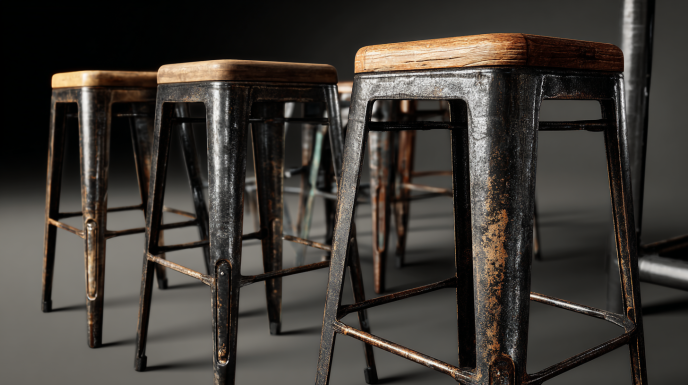
There is a reason that industrial iron bar stools have endured across decades of shifting interior design trends — and that reason is more than aesthetic. These fixtures represent a convergence of function, form, and longevity that few other furniture categories can match. Whether you are furnishing a high-traffic restaurant, a sleek home kitchen island, a backyard entertainment area, or a craft brewery with a serious sense of character, wrought iron and steel bar stools built in the industrial tradition deliver a level of durability and visual authority that softer, wood-only alternatives simply cannot replicate.
Industrial-style seating is rooted in the factory aesthetics of early 20th-century manufacturing spaces — raw metal, visible welds, functional footrests, and uncompromising structural integrity. Over time, designers began translating these elements into residential and commercial furniture, pairing heavy-gauge metal frames with reclaimed wood, leather, or upholstered seats to create pieces that feel both rugged and refined. Today, the category spans an extraordinary range of price points, styles, and use cases, making it easier than ever to find the right stool — but also more important than ever to know precisely what you are looking for before you buy.
This guide draws on product data from leading commercial seating suppliers and consumer marketplaces to give you an expert-backed, purchase-decisive look at industrial iron bar stools: what makes them worth the investment, which products are leading the market right now, and how to select the right one for your specific application. By the end, you will have everything you need to make a confident, informed purchase.
Top 5 Most Popular Industrial Iron Bar Stools Right Now
The following five products represent the most sought-after options in the industrial iron bar stool category, based on purchase volume, customer satisfaction ratings, commercial adoption, and overall value. Each one brings a distinct combination of materials, dimensions, and design character to the table.
1. HOOBRO Industrial Counter Height Barstools (Set of 2)
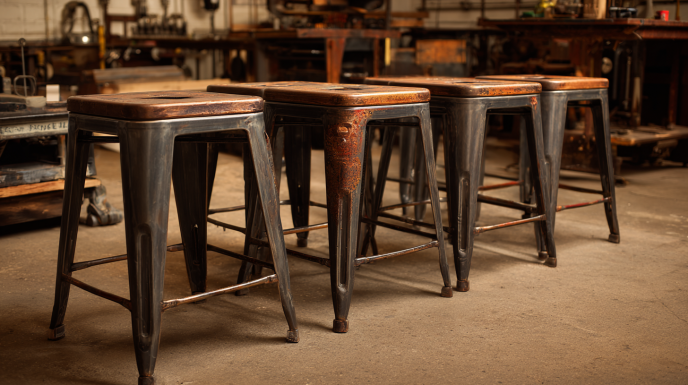
Brief Description: The HOOBRO industrial barstools are among the best-selling iron bar stools on the consumer market, with over 1,000 units purchased per month — a figure that speaks directly to real-world buyer confidence. These stools feature a rustic brown wood seat paired with a powder-coated black steel frame, designed for both aesthetic appeal and structural stability. Standing at 24.8 inches in seat height, they are sized precisely for standard kitchen counters and bar islands. An integrated footrest provides comfort during extended seating, and anti-slip feet protect flooring surfaces from abrasion. The clean industrial silhouette is versatile enough to complement farmhouse, contemporary, and traditional interior settings.
Rating: ⭐⭐⭐⭐½ (4.5/5)
Price Range: $60 – $90 per set of 2
2. Signature Design by Ashley Valebeck Rustic Farmhouse Swivel Bar Stool
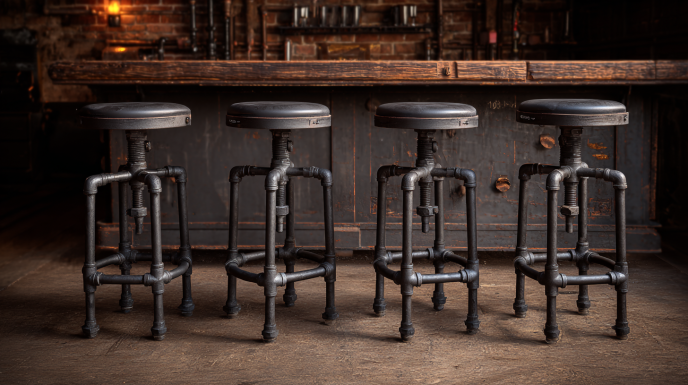
Brief Description: The Ashley Valebeck stool earns its place as a consistent consumer favorite through its 360-degree swivel mechanism, 24.5-inch counter height configuration, and combined metal-and-wood frame wrapped in polyester upholstered cushioning. With 500+ units sold per month, the demand is not trend-driven — it is performance-driven. The brown tonal palette and farmhouse-industrial crossover aesthetic make it one of the most versatile stools in the category. It transitions naturally from a modern kitchen to a rustic dining room, from a home bar to an open-plan entertaining space, without ever looking out of place. The swivel function adds a layer of social convenience that fixed-frame alternatives cannot offer.
Rating: ⭐⭐⭐⭐½ (4.5/5)
Price Range: $100 – $160 per stool
3. COSTWAY 30″ Swivel Bar Height Stools (Set of 4)
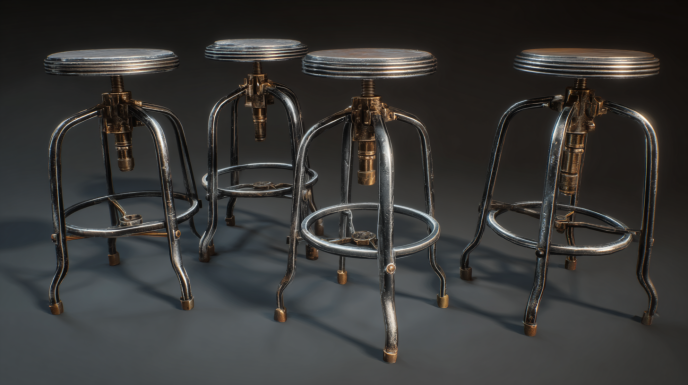
Brief Description: For buyers who need to furnish multiple seats simultaneously, the COSTWAY 4-piece set is a leading value proposition in the industrial iron category. These 30-inch bar-height stools feature a 360-degree swivel function, padded faux leather seats, and a vintage-inspired metal frame construction that fully embodies industrial design principles. Amazon’s Choice recognition and consistently strong reviews across a broad buyer demographic confirm this product’s reliability. The set format makes it especially well-suited to restaurant counters, home bars, and pub-style kitchen islands where seat alignment and visual consistency are as important as individual stool quality.
Rating: ⭐⭐⭐⭐ (4.2/5)
Price Range: $120 – $180 per set of 4
4. Black Steel Tolix Restaurant Bar Stool with Arched Metal Backrest
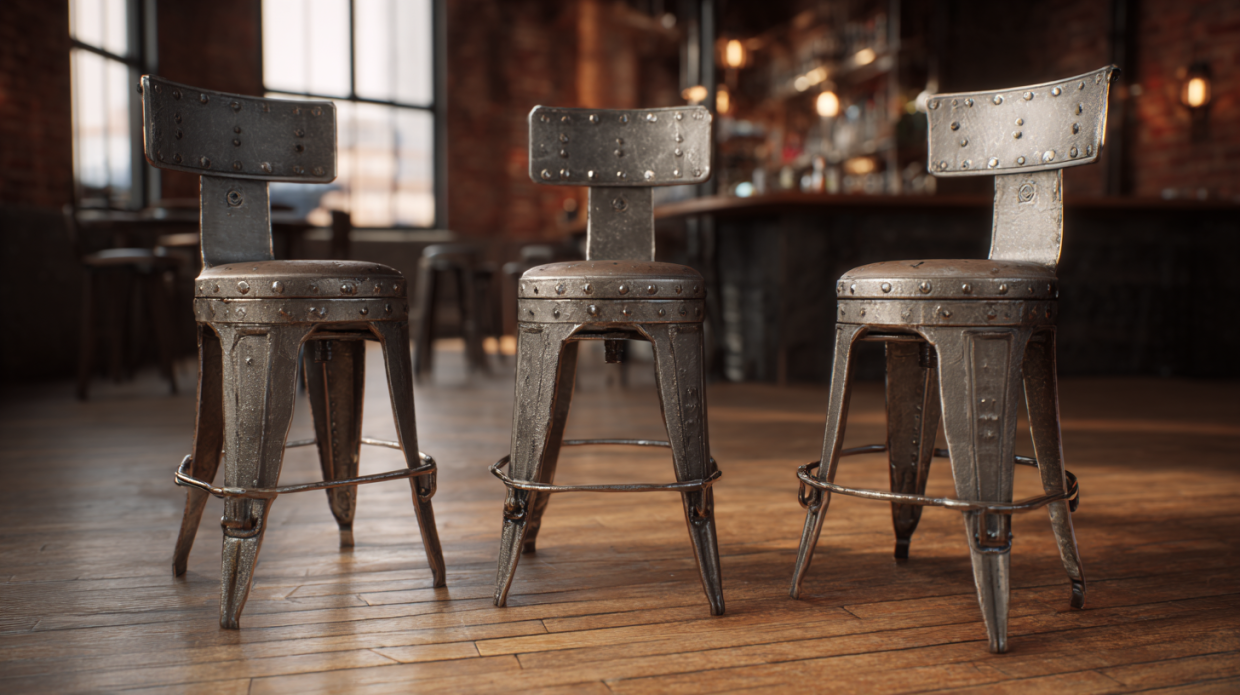
Brief Description: A true staple of the commercial restaurant seating industry, the Black Steel Tolix Bar Stool is a design archetype that has proven itself in high-traffic hospitality environments worldwide. The stamped steel construction provides an exceptional strength-to-weight ratio, while the arched metal backrest adds a subtle ergonomic element to the otherwise stripped-back industrial silhouette. Available in a Quick Ship format from commercial suppliers, it is a dependable choice for restaurant operators, bar owners, and café designers who cannot afford long lead times or quality uncertainty. The matte black powder coat finish holds up under the rigors of daily commercial use with minimal maintenance.
Rating: ⭐⭐⭐⭐½ (4.4/5)
Price Range: $75 – $100 per stool
5. French Industrial Metal Bar Stool (Affordable Seating SKU: ASF-ERAT-448-BS)
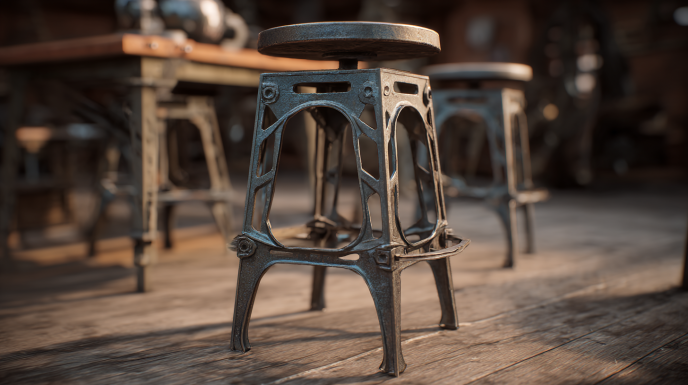
Brief Description: The French Industrial Metal Bar Stool brings a sophisticated European industrial aesthetic to both commercial and residential environments, and it backs that aesthetic with genuine structural engineering. Built on a fully welded, sandblasted black metal frame, it supports up to 400 pounds — placing it among the most structurally capable options in the mid-price bracket. The dark walnut contoured veneer wood seat and back provide real comfort while elevating the visual profile of the piece considerably above purely functional competitors. At 46 inches in overall height with a 30-inch seat height, it is correctly calibrated for standard bar counters, and a matching dining chair is available for spaces that require cohesive theming across multiple seating zones.
Rating: ⭐⭐⭐⭐ (4.3/5)
Price Range: $170 – $185 per stool
The Case for Industrial Iron: Why This Style Dominates the Market
The sustained dominance of industrial iron bar stools across both residential and commercial markets is not accidental. It is the result of a clear and repeatable value proposition that buyers across all segments consistently respond to.
First and foremost is structural durability. Wrought iron and heavy-gauge steel are among the most resilient materials available in furniture construction. A properly welded iron frame, treated with a quality powder coat or sandblasted finish, can withstand decades of daily use without warping, cracking, or significant visible wear. This is precisely why the commercial hospitality industry — restaurants, bars, cafes, breweries, and clubs — so heavily favors metal frame bar stools over their wooden counterparts. When seating must endure hundreds of occupants per day, material integrity is not a preference; it is a requirement.
Second is the weight capacity advantage. Many of the top-rated industrial iron bar stools in this category are rated at 300 to 400 pounds of static load capacity. The fully welded construction found in commercial-grade products means that load is distributed across the entire frame rather than concentrated at mechanical joints, which is where failure most commonly originates in bolt-together designs. For residential buyers, this surplus of engineered strength translates into a stool that never feels flimsy, unstable, or temporary under normal conditions of use.
Third is aesthetic adaptability. The industrial style — defined by exposed metal hardware, raw or distressed finishes, clean geometric lines, and minimalist construction — has an unusual ability to integrate with a wide spectrum of interior design languages. It works with modern minimalist spaces as cleanly as it works with rustic, farmhouse, or vintage environments. This makes industrial iron bar stools one of the most broadly deployable furniture investments a buyer can make. You are unlikely to outgrow them, redesign around them, or find them visually at odds with changing interior trends.
Finally, there is the long-term value equation. Across the price range surveyed — from approximately $60 for entry-level consumer sets to over $230 for fully upholstered commercial-grade stools — industrial iron bar stools consistently deliver more material quality per dollar than comparable wood or plastic alternatives at equivalent price points. The durability of the material means cost-per-year of ownership is dramatically lower across the product’s operational life.
Key Features to Evaluate Before Buying
Not all industrial iron bar stools are created equal. A methodical buyer will evaluate the following features carefully before committing to a purchase.
Frame construction method is perhaps the single most critical factor. A fully welded frame is significantly stronger than a bolt-together assembly. Welded joints eliminate the mechanical failure points that develop when bolts loosen under cyclical load — the primary cause of bar stool instability and wobbling over time. Commercial-grade products consistently feature fully welded construction, and this specification alone justifies a meaningful price premium for buyers who prioritize long-term reliability.
Seat height and counter height compatibility must be verified before any purchase. Standard bar height, measured floor to seat, is 28 to 30 inches, designed for 40 to 42-inch bar counters. Counter height runs typically 24 to 26 inches, designed for 35 to 37-inch counters. Mismatching stool height to counter height is one of the most common — and entirely avoidable — buying errors in this category. Always measure your counter before selecting your stool height.
Swivel versus fixed is a functional decision that depends on use case. Swivel stools offer greater convenience in social settings where occupants turn frequently to engage across the room. Fixed stools are simpler, lower-maintenance, and often more structurally robust over time. For restaurant operators managing high-turnover commercial environments, fixed-frame stools typically offer superior longevity. For home kitchen islands and home bars, swivel functionality is generally the preferred configuration.
Seat material significantly affects both the comfort profile and the maintenance requirements of the stool. Solid wood or reclaimed wood seats offer an authentic industrial aesthetic and clean easily, but they provide no inherent padding. Upholstered seats in faux leather, genuine leather, or polyester fabric add meaningful comfort for extended seating, but require more careful maintenance and may show wear more quickly in commercial applications. Metal seats, as found in classic Tolix-style stools, are the most durable and easiest to sanitize, but they benefit substantially from added seat cushions in settings where guest comfort is a priority.
Finish quality governs long-term corrosion resistance and appearance retention. A quality powder-coat finish on iron or steel creates a uniform, chemically bonded protective layer that resists rust, chipping, and UV degradation far more effectively than liquid paint finishes. For outdoor applications or high-humidity environments — patio bars, poolside counters, or steam-exposed kitchens — powder coating is an absolute requirement, not an optional upgrade.
Weight capacity is a specification many buyers overlook until it becomes consequential. Most residential iron bar stools carry ratings between 250 and 330 pounds. Commercial-grade stools are generally rated at 300 to 400 pounds. In commercial environments, always select stools rated at the upper end of the capacity range to accommodate the full distribution of guests and to satisfy any applicable seating safety standards.
Materials at a Closer Look: Wrought Iron, Cast Iron, and Steel
The terms wrought iron, cast iron, and steel are frequently used interchangeably in furniture marketing, but they describe materials with meaningfully distinct properties that informed buyers should understand.
Wrought iron is a commercially pure iron alloy that has been worked or forged — historically through hammering — into its final form. It is exceptionally tough, ductile, and naturally resistant to corrosion, making it ideal for ornate or scrollwork-heavy designs that require precise fine detail. Bar stools featuring scrolling decorative metalwork — such as the Sunnydaze wrought iron outdoor bar chairs with their signature scrolling design — are genuine wrought iron products that carry both aesthetic distinction and long-term material resilience.
Cast iron is a more brittle alloy poured into molds rather than forged. It allows for highly detailed, consistent decorative shapes — tractor-seat designs, fluted column bases, and elaborate footrest configurations — but it is heavier and less impact-resistant than wrought iron or steel. Cast iron bar stools are typically the heaviest and most visually substantial options in the industrial category, making them well-suited to permanent commercial installations where mobility is not a requirement.
Steel, particularly heavy-gauge tubular steel, is the most prevalent material in modern industrial bar stool production at every price point. It is lighter than iron, simpler to weld precisely, and — with a proper powder coat — highly resistant to both corrosion and mechanical wear. The majority of commercially produced industrial iron bar stools available today are technically steel-framed, though the “iron” descriptor is broadly and conventionally applied across the entire category.
Styling Your Space Around Industrial Iron Bar Stools
The visual language of industrial iron bar stools is assertive and specific, and styling your space to complement them will amplify their impact rather than create visual competition within the room.
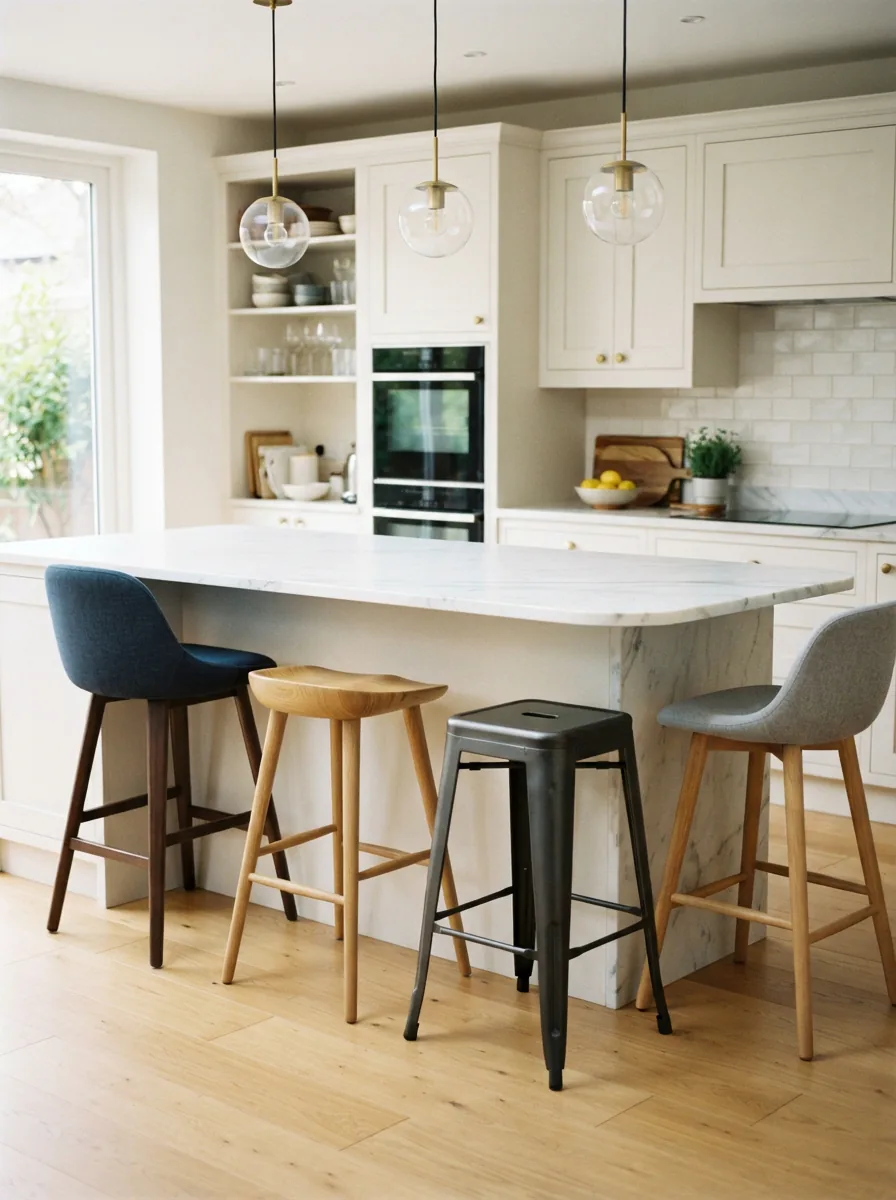
In kitchen environments, pair dark iron or steel bar stools with white marble, concrete, or butcher block countertops for maximum material contrast. The juxtaposition of raw metal with refined or natural surface materials is a defining hallmark of industrial design executed well. Exposed brick walls, pendant Edison-bulb lighting, and open shelving supported by iron brackets will reinforce the design language cohesively throughout the space.
In commercial environments, visual consistency is essential. Selecting a matching set of industrial iron bar stools — unified in finish, seat material, and height — creates a professional, intentional atmosphere that guests register immediately and respond to positively. Most commercial suppliers offer sets of four or more at reduced per-unit pricing, and quick-ship programs at restaurant-grade suppliers support tight construction and build-out timelines.
For outdoor spaces, selecting powder-coated iron or cast aluminum stools with UV-stable finishes ensures that the visual authority of the industrial style holds up across seasonal weather exposure. Untreated iron should never be used in outdoor applications, as surface rust can establish itself within a single wet season and is difficult to remediate once it has penetrated below the surface layer.
Commercial Use: What Operators Need to Know
Restaurant, bar, and café operators face requirements that go well beyond residential aesthetics. Commercial-grade industrial iron bar stools must withstand use cycles that are dramatically more demanding than any residential context — a busy bar stool may be occupied by 50 or more guests per day, every day, across years of continuous operation.
The critical differentiators between consumer and commercial-grade products are joint construction quality, finish durability, and structural weight rating. Commercial stools built to hospitality specifications prioritize fully welded frames, commercial-grade powder coat finishes that resist both heavy cleaning chemicals and physical abrasion, and weight capacities calibrated to the full range of guests. Net 30 financing options available through commercial suppliers support build-out cash flow management, and bulk ordering from a single commercial source guarantees the dimensional and finish consistency that a polished commercial installation demands.
Care and Maintenance: Protecting Your Investment
One of the most underappreciated advantages of industrial iron bar stools is how genuinely low-maintenance they are relative to fully upholstered or all-wood alternatives. A simple, consistent care routine will keep your stools looking sharp and performing structurally for years — and in many cases, for decades.
For powder-coated frames, routine wiping with a damp cloth and mild detergent is sufficient for day-to-day maintenance. Avoid abrasive cleaning compounds that can compromise the integrity of the powder coat surface. For wooden seat components, periodic application of a quality wood conditioner will prevent drying and surface cracking, particularly in low-humidity environments or spaces with significant seasonal climate variation. Any bolted connections — where present — should be inspected and tightened every few months to maintain full structural integrity under cumulative load cycles.
For outdoor installations, an annual inspection for surface rust emergence is strongly recommended. Minor surface oxidation can be treated promptly with a rust-inhibiting primer and a matched touch-up coating. If rust is allowed to penetrate below the surface layer into the base metal, structural remediation becomes significantly more complex and expensive.
Making the Right Decision: A Final Word
Industrial iron bar stools are not merely a design choice — they are a long-term investment in the quality, character, and functional reliability of your space. Whether you are a homeowner anchoring a kitchen island with genuine material authority, a restaurateur equipping a bar program designed to run profitably for years, or a designer specifying seating for a full commercial build-out, the industrial iron category offers a range of products that can meet your needs at every price point.
The five products highlighted in this guide represent the strongest current options across consumer and commercial segments. From the high-volume everyday value of the HOOBRO industrial counter-height set to the commercial-grade precision and 400-pound weight capacity of the French Industrial Metal Bar Stool, each product has been selected based on documented purchase performance, material quality, and buyer satisfaction data.
The decision framework is clear: invest in fully welded construction, verify your height specifications against your actual counter measurements, match the finish type to your environment’s moisture and UV exposure level, and prioritize weight capacity at the upper end of your anticipated need. Execute on these four criteria, and your industrial iron bar stools will deliver years — and in all likelihood, decades — of reliable, visually commanding service.